

Road Safety Strategy 2035 and Beyond
Road safety is a key priority for Canada. As our communities grow and transportation systems evolve, ensuring the safety of all road users—drivers, passengers, pedestrians, transit users and cyclists alike—remains a national imperative.
Responsibilities for safety in Canada are shared by all levels of government, non-governmental organizations and civil society. The purpose of Canada’s RSS 2035+ is to provide a national framework that guides and supports coordinated efforts to eliminate fatalities and serious injuries on Canadian roads.
Rooted in the Safe System Approach (SSA) and the vision of “Towards Zero,” the strategy aims to align the actions of all road safety partners—governments, industry, non-governmental organizations, and the public—toward a common goal of safer, more inclusive, and sustainable mobility.
RSS 2035+ is the result of extensive engagement with governments and road safety partners across Canada. It is a call to action for all Canadians to work together to make our roads safer for everyone, regardless of how they travel.
Canada also supports the United Nations Decade of Action for Road Safety 2021-2030 and its goal of a 50% reduction in deaths and injuries by 2030. This strategy supports Canada’s response to this road safety plan.
RSS 2035+ encourages each jurisdiction to develop tailored road safety plans that reflect local needs while contributing to national objectives. By fostering collaboration, innovation, and evidence-based decision-making, the strategy serves as a catalyst for continuous improvement in road safety across Canada.
RSS 2035+ will be a living document.
Recognizing that road safety is a shared responsibility across all levels of government and industry, RSS 2035+ provides a flexible structure to support the development of regional and local safety plans tailored to specific needs.
Together, through education, enforcement, engineering, and engagement, we are working to make Canada’s roads among the safest in the world—because every life matters.
Road Safety Strategy 2035 and Beyond (RSS 2035+) is the fifth iteration in a series of national road safety plans and represents a renewed and unified commitment to reducing road fatalities and serious injuries, while fostering a culture of safety across the country. Building on the foundation of the “Towards Zero” vision3 and the progress made under previous strategies; this continuing initiative embraces the Safe System Approach (SSA)4. It recognizes that while human error is inevitable, deaths and serious injuries on our roads are not.
This context underscores the critical need for a renewed, data and research-driven strategy to reverse these trends and protect all road users.
By fostering collaboration, innovation, and evidence-based action, RSS 2035+ reflects a renewed commitment towards a safer, more inclusive, and sustainable road system for all Canadians.
______
3. Vision Zero tool references – Parachute
4. International Transport Forum (2022), The Safe System Approach in Action, Research Report, OECD Publishing, Paris.
Strategic Objectives
To support the vision of “Towards Zero,” RSS 2035+ outlines eight strategic objectives that provide a foundation for coordinated, evidence-based, and accountable road safety action across Canada. These objectives are designed to guide jurisdictions in developing and implementing effective safety plans while fostering national consistency and collaboration and keeping the strategy alive through 2035:
-
Foster a culture of road safety through sustained leadership and active participation from all partners—governments, enforcement agencies, civil society, industry and road users
-
Good governance - strengthen coordination and cooperation across all levels of government and industry by establishing clear roles, responsibilities, and decision-making processes
-
Promote the collection, integration, and timely sharing of high-quality data to support evidence-based decision-making
-
Ensure that regulatory and policy frameworks remain responsive to emerging technologies, mobility trends, and safety challenges
-
Enhance public understanding of road safety risks and promote safe behaviours through sustained education, training, and awareness initiatives
-
Advance the design and deployment of safer vehicles and road infrastructure that reduce crash risk and mitigate harm.
-
Support effective enforcement of road safety laws and standards through adequate resourcing, training, and collaboration with police and compliance agencies
-
Leveraging Technology - Increase the use of digital tools, systems, or innovations to enhance efficiency, solve problems, or create new opportunities.
RSS 2035+ Guiding Approach
Canada’s RSS 2035+ is grounded in the Safe System Approach (SSA), an internationally recognized framework that acknowledges the inevitability of human error and the need to design a transportation system that prevents those errors from resulting in death or serious injury5.
This approach represents a shift from traditional road safety models by focusing not only on individual behaviour, but on the broader system in which people travel.
The SSA is built on the following core principles:
- Deaths and serious injuries are unacceptable
- People make mistakes
- The human body has limited tolerance to crash forces
- Road safety is a collective responsibility
- Multiple layers of safety—such as safe infrastructure, vehicle technology, speed management, safer road users, and emergency response—work together to reduce risk and mitigate harm
- The system must be designed to prevent collisions before they occur and ensure safety for all users, especially vulnerable groups such as pedestrians, cyclists, children, seniors, and people with disabilities.
__________
5. https://toolkit.irap.org/management/safe-system-approach/
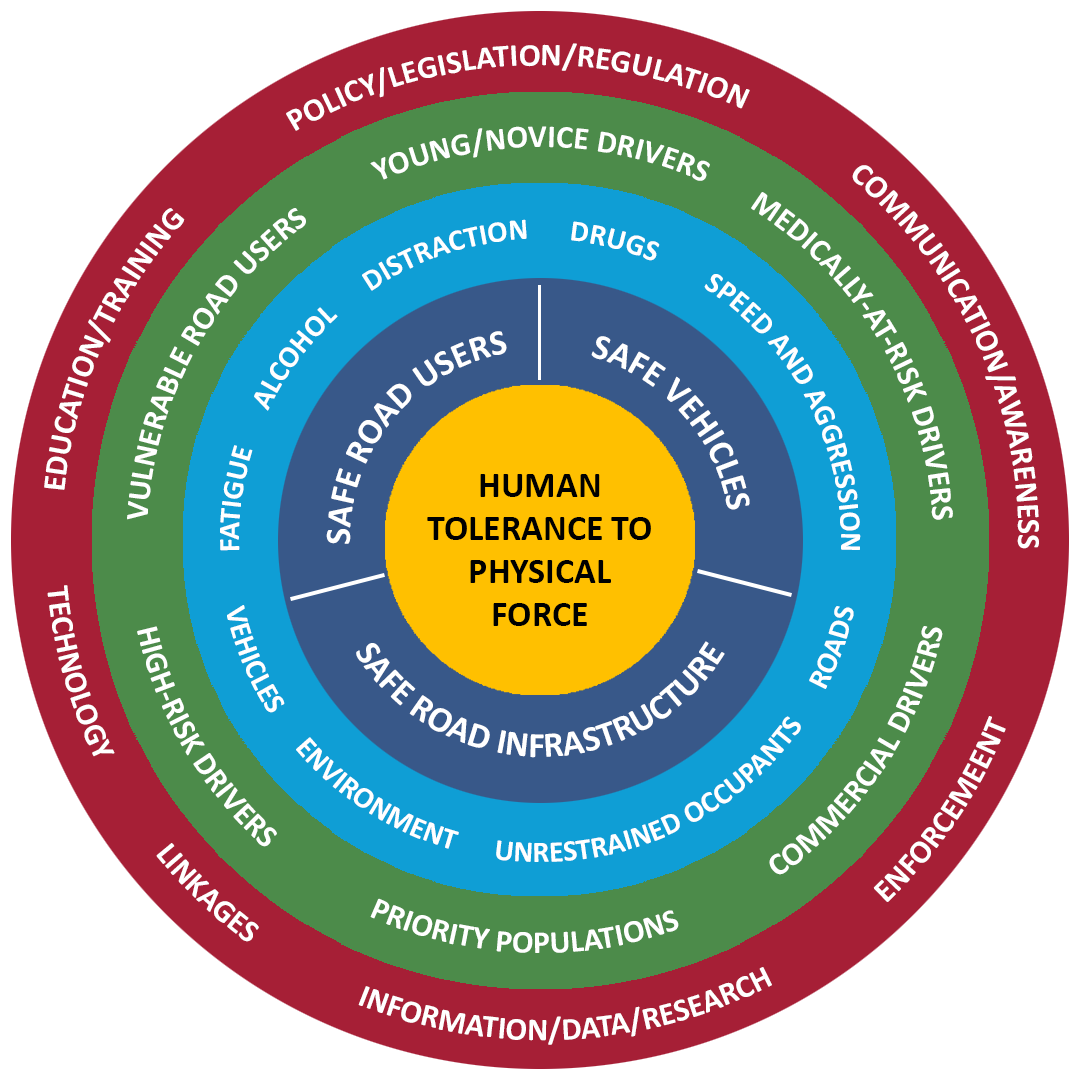
Figure 1.1. Source: Adapted from the 2009 WHO report on the Global Status on Road Safety which was in turn modified from work commissioned by the Government of Western Australia.
The diagram is meant to graphically represent RSS 2035+, with human safety at the centre, the other layers representing key systems, contributing factors, risk groups and tools to effect change as per the legend.
Canada’s Road Safety Framework
In Canada, each level of government has distinct jurisdictional authority, and they collaborate closely to address shared challenges and advance national road safety goals.
This cooperation is facilitated through intergovernmental bodies such as the Transportation Association of Canada (TAC) and the Canadian Council of Motor Transport Administrators (CCMTA), under the oversight of the Council of Ministers Responsible for Transportation and Highway Safety (CoM).
The intent of RSS 2035+ is to provide a national framework to guide all safety partners in coordinated planning. While it does not prescribe a uniform plan, it encourages each jurisdiction to develop and publish its own road safety strategy tailored to local needs and legal frameworks and also reflects the input of non-governmental safety partners. This collaborative, flexible approach ensures that road safety efforts are both nationally aligned and locally responsive.
Governance and Engagement
Effective governance and meaningful partner engagement are central to the success of Canada’s RSS 2035+. Given the shared jurisdictional responsibilities for road safety in Canada, the strategy is supported by a collaborative governance model that brings together federal, provincial, territorial, and municipal governments, as well as other partners, including industry, non-governmental organizations, academic institutions, and road users.
The strategy is overseen by the Council of Ministers Responsible for Transportation and Highway Safety (CoM), which provides high-level direction and support.
Operational leadership is provided by the Canadian Council of Motor Transport Administrators (CCMTA), which, as the custodian of the RSS 2035+, facilitates intergovernmental collaboration, data sharing, and the development of national guidelines, best practices to support safety programs, and supports continuous learning and the identification of evidence-based interventions and technologies.
The CCMTA Road Safety Research and Policies Program Committee (RSRP), through a specialized RSS Working Group, will be the committee responsible for developing an implementation plan for RSS 2035+ and addressing all ongoing monitoring and updates to the living strategy, as well as engaging with safety partners and staying up to date on regional, national and international safety programs, policies and countermeasures.
Such a collaborative process is required to reduce deaths and serious injuries on Canadian roads with the ambitious goal of working towards a safe road system for all Canadians.
More fulsome and robust evaluation and reporting will take place at approximately 5-year intervals.
Celebrating Success
Canadian Council of Motor Transport Administrator’s (CCMTA) Awards Program recognizes individuals and organizations who have contributed to improving road safety in Canada.
Created in support of Canada's Road Safety Strategy, the CCMTA Road Safety Award recognizes CCMTA government members or associates (individuals, groups, departments, and/or organizations) who have implemented strategies aimed at reducing injury and death on Canada's roads.
For additional information on the CCMTA awards including a list of past recipients, visit CCMTA's website.
Canadian Council of Motor
Transport Administrators
1111 Prince of Wales
Suite 404
Ottawa, Ontario
Canada K2C 3T2
T: 613.736.1003
Email: info@ccmta.ca